The Model-Governance Review Board
Course Design · Case study
A model that helps some groups and harms others goes before a NIST AI Risk Management Framework (AI RMF) board. You quantify the harm, map it to the framework, choose a mitigation that names its cost, cast a vote, and defend it on camera.
Run the simulation
What this simulation is
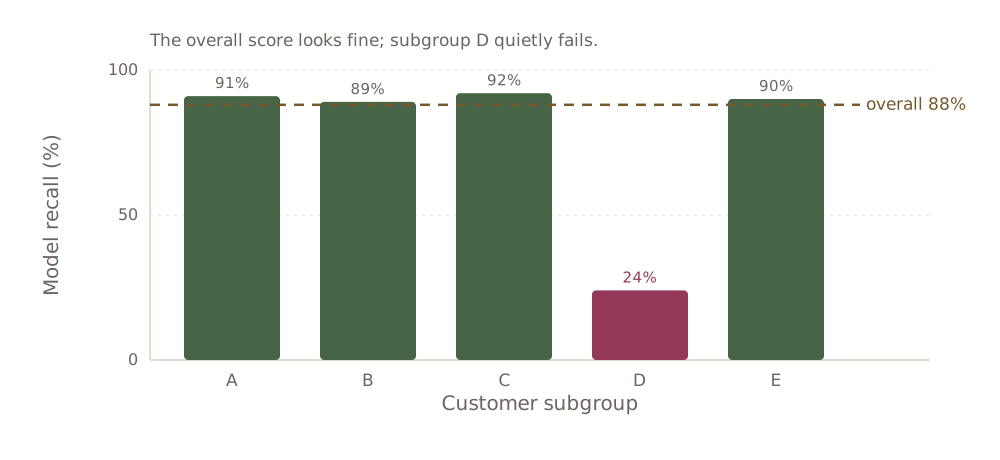
This is the summative simulation for the data and AI ethics and governance module. The learner brings forward the very model they audited in Module 5, whose subgroup-performance table shows real disparate impact, convenes a NIST AI Risk Management Framework (AI RMF) review, assembles a governance dossier (a Model Card and a Datasheet for the Dataset), maps the harms to the four RMF functions, and takes a position: approve, reject, or condition.
The interactive board tool walks the learner through the decision, then hands off to a recorded defense with randomized questions. The live defense before an instructor-and-peer board is still the graded event.
What it assesses
- Quantifying disparate impact with subgroup metrics, ratios, and honest treatment of small subgroups.
- Completing a Model Card with intended and out-of-scope use and candid limitations.
- Completing a Datasheet for the Dataset covering provenance and consent.
- Mapping harms onto Govern, Map, Measure, and Manage with concrete, non-generic controls.
- Proposing mitigations that each name the metric or capability they degrade.
- Defending an approve, reject, or condition vote under live questioning.
The dossier is grounded in the student’s own audited model and its specific subgroup numbers, the mapping uses the actual RMF functions rather than generic principles, and the vote must be defended live under questions that react to the individual’s answers. A generic AI-generated ethics essay cannot supply the real subgroup table or answer the board’s follow-ups in real time.