Design Studio
Experiential Learning · Case study
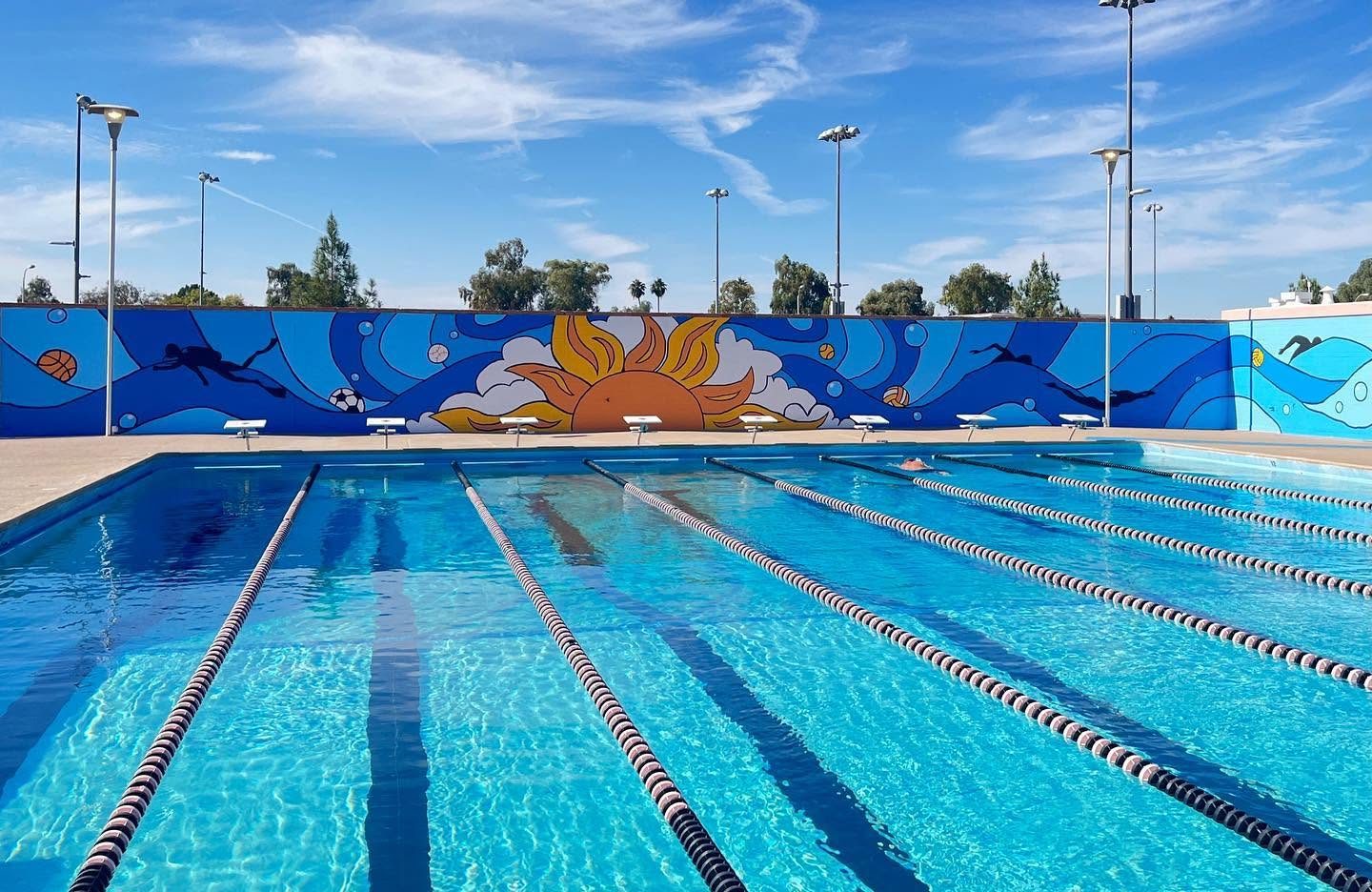
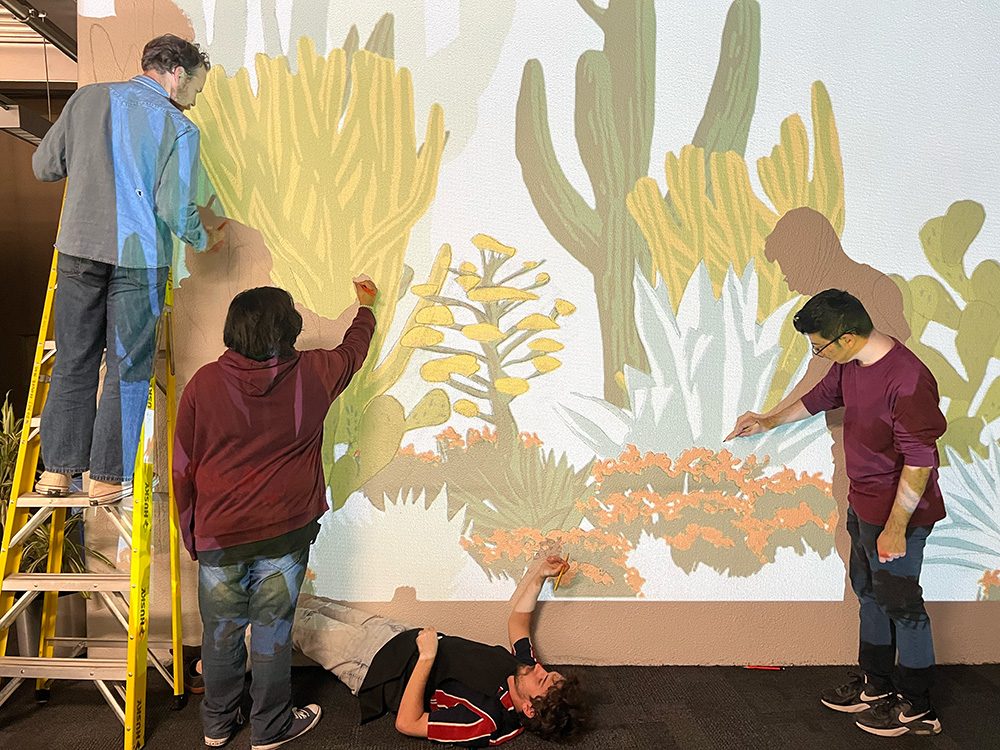
Real clients, real briefs, real deadlines. This course sent students into live work from campus partners and had them ship it, from a 95-foot mural to motion, print, publications, and an app.
Goal
This is what I am known for on campus, and it is the part of teaching I care about most.
Put students in front of actual clients and actual deadlines, so they graduate with professional work rather than class assignments. It is a requirement, not an extra: every student in the program completes client work in the studio or an internship placement before they graduate. While the studio ran as a course, every project came through me, and every project on this page was made inside it.
The design of it is the point. In an ordinary assignment the instructor is the audience, so the student is really performing for a grade. Here a client is waiting, the work goes out into the world, and the student has to defend the choices to someone who did not assign them. The assessment is the professional task. There is no way to fake it, no way to paste it, and nothing a model can hand back that a client will accept.
Audience
Students first, and not only design students. The studio is a multidisciplinary group: film, photography, animation, graphic design, and sound design students, who we bring in often on the videos, because a real client brief rarely stays inside one discipline. Campus partners second: the offices, programs, and committees who need this work and have no creative staff of their own.
Process
Students work in teams, and one student on each team serves as the project manager. That student writes the design brief and the timeline, interfaces directly with the client, and keeps the team on track. The brief names the client, the goal, the approach, and what the client actually needs; the timeline carries the proof cycles, the client approval gates, and the delivery date.
While it ran as a course, the instructor’s job was to decide which projects the studio took on and in what order, and to hold the standard. The students’ job was to run it.
The boards below are the working evidence, not a reconstruction. Both were built by student teams while the work was live.
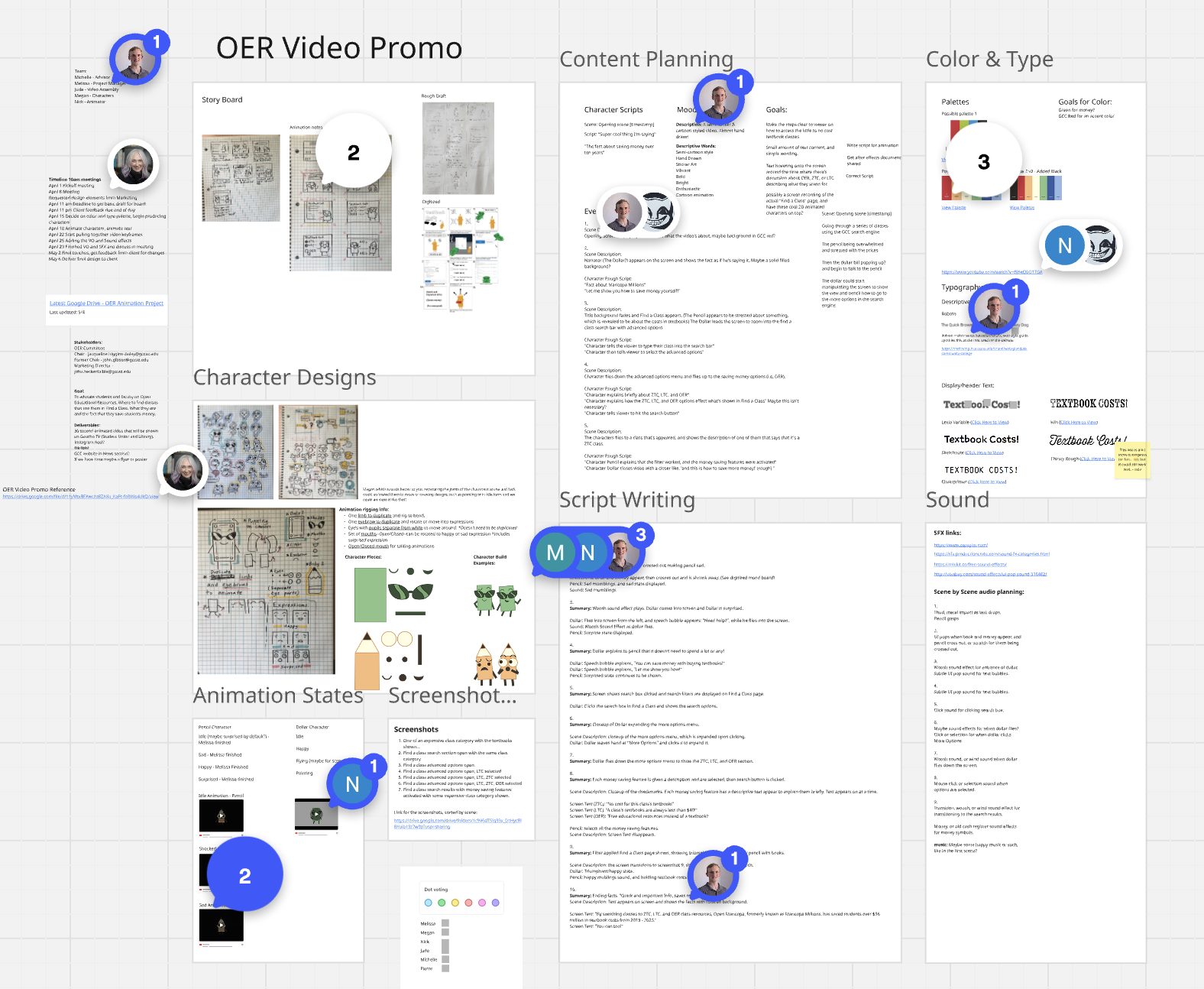
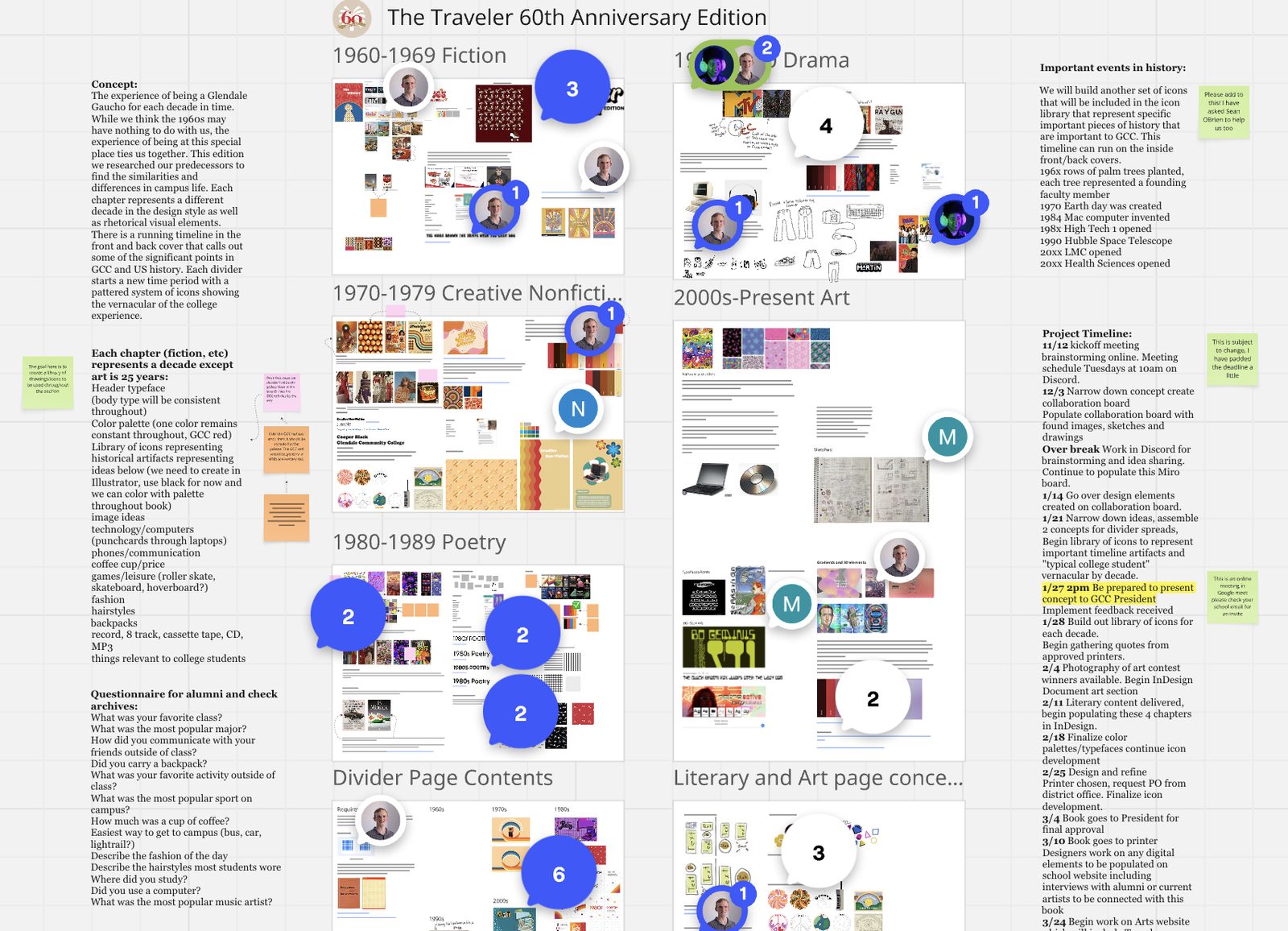
So they leave with two things, not one. They leave with the work, and they leave having practiced real project management methodology. Designers are rarely taught any of it, and it is the thing that decides who gets to lead.
Which is why it belongs on a student’s resume as an internship, because that is what it is. They had a client, a brief, a deadline, and a deliverable that shipped. The only difference between this and an internship is that it happened to be worth credit.
Technology
- Student teams run on Basecamp, Slack, Miro, and Discord.
- The tools change with the brief, because the projects range so widely:
- Graphic design and publications: Adobe Illustrator, Photoshop and InDesign, and Canva.
- Motion and video: After Effects and Premiere.
- 3D: Cinema 4D.
- Games and interactive: Unity.
- Web: Drupal.
Outcomes
Now a grant-funded paid studio. The model outgrew the course: we wrote a grant, it came through, and the class no longer runs. The studio employs four paid students each semester, drawn from film, photography, animation, and design, doing client work for a wage instead of for credit. Students who want the experience without the job take an internship placed with a client instead.
A film faculty member runs it now, advised by three faculty. Handing it off was the point. The work students made inside the course is what made the case for funding it, and it outlasted any one instructor.
A recent hire shows what the full path can do. A digital media student was hired as an associate marketing designer at Workday after a year as one of the studio’s paid student designers, leading the student design team for The Traveler and completing an internship with a program sponsor. Her hire reflects a student who took advantage of everything the program offers, not a two-year degree alone.
The pieces below are a selection, followed by a client list that names each client once, though many came back year after year.
Selected client work
Nobody knew the free-textbook filter existed
Client · Open Educational Resources Committee
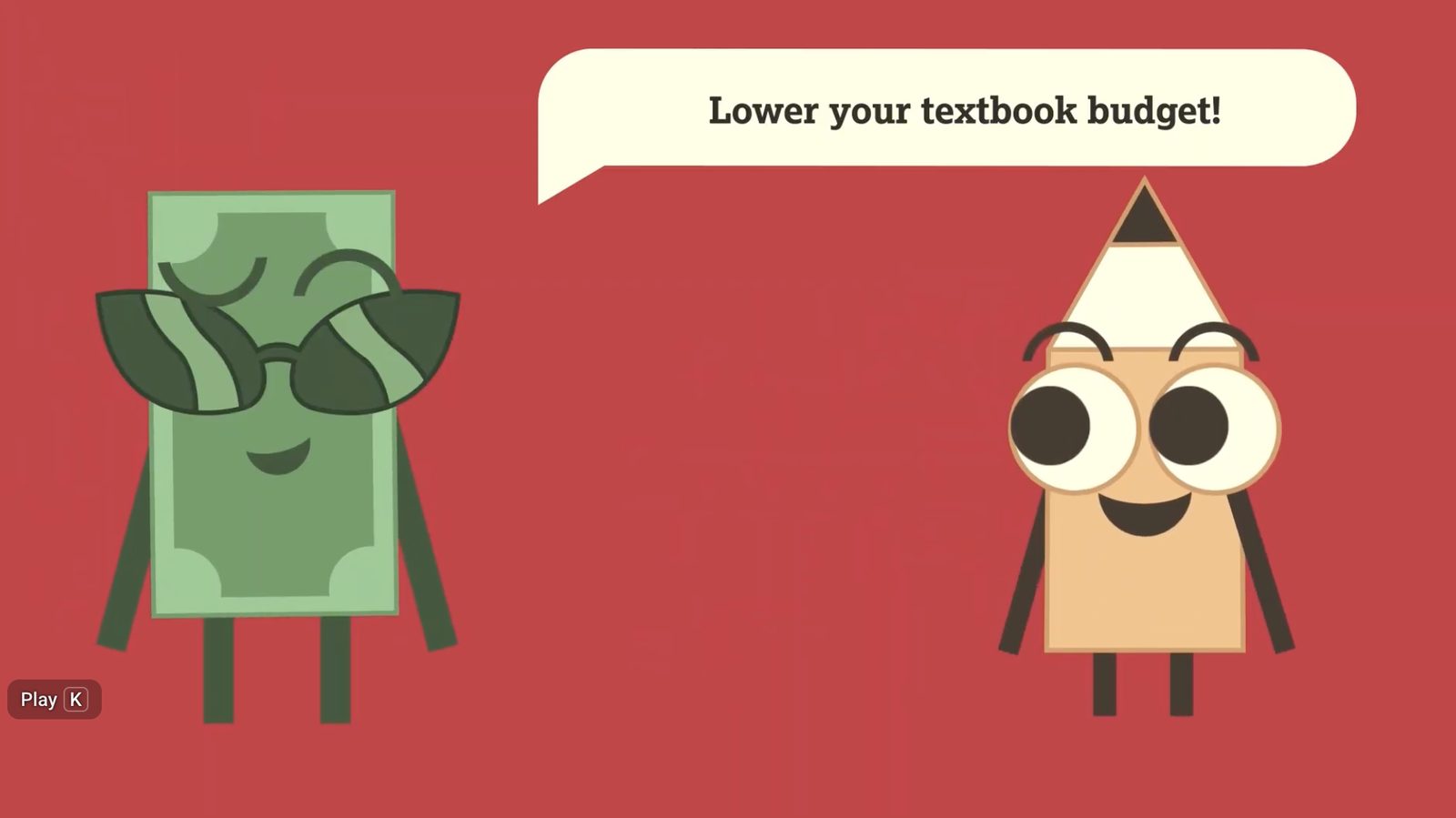
Open Maricopa, formerly Maricopa Millions, is a district program created by district colleagues. It funds faculty to build their own course materials instead of assigning a textbook, and it has saved students more than $36 million. Students see it as a filter in course search, and that is the problem: a filter nobody notices saves nobody anything, which makes this an adoption problem rather than an engineering one. The college’s OER committee brought it to the studio as a brief with one hard constraint. The piece had to play on Gaucho TV and the screens in the student union, and those screens have no sound. It had to be understood by someone walking past, with the audio off, who was not planning to pay attention. That constraint is what made it a design problem: no voiceover to lean on, so the motion, the characters, and the interface had to carry all of it.
Produced by Digital Media Arts students under faculty direction. The filters are live in Maricopa Find a Class.
A day in the life, told by the people living it
Client · Digital Media Arts recruitment
A prospective student does not want a brochure, and the only people who can describe the life are the ones living it, so the students made the recruitment piece themselves. It opens on an alarm clock and follows a Digital Media Arts student through an ordinary day, across campus, into class, into the work. It is live action with hand-drawn animation laid over it, which is harder than either one alone, and it is both narrated and captioned, so it holds up with the sound off and for a viewer who needs the text. Nobody required that. It is the same instinct every brief here demands: decide who you are actually talking to, then meet them where they are.
Produced by Digital Media Arts students under faculty direction.
More client work
The client list
- The Traveler
- The college’s student literary and visual arts publication. Fifteen editions, each designed by a student team as a full production cycle with its own concept. See The Traveler
- Fitness and Wellness
- A personal-training app designed with personal-training students as the subject-matter experts, so the exercise science came from the people studying it
- Engineering
- A 3D rendering of a solar car, made to help the program raise the funding to build it
- Open Educational Resources Committee
- The animated explainer shown above
- International Education Center
- An orientation booklet and presentation for students arriving from other countries
- Campus Theatre
- Posters for plays and productions across four seasons, a new brief every few weeks
- Verve Dance Company
- Posters, programs, and promotional material for the company across four seasons
- The Library
- An illustrated map of the building, made for Halloween
- The Astronomy Festival
- A commemorative pin, a designed object people kept
- Science Olympiad
- Event apparel, a client that came back year after year
- Odyssey of the Mind
- Apparel for the creative problem-solving competition
- Online Psychology Course
- A set of achievement badges for the course
- Animation and Film Festivals
- Title bumpers for every festival
- Spanish (Prototype)
- A Mayan-inspired interface for an online Spanish course, a simulation where students enter a Mayan village and complete tasks in Spanish. A prototype, never put into production.
- Biology (Prototype)
- A game for learning the scientific process using the animals and plants of the Sonoran Desert. A prototype, never put into production.
- District Office, Student Services
- A marketing video for the Maricopa district’s student-services office, made for students who could not find childcare or emergency funds, or did not know where to turn for help. An early cut survives. It is the same problem the district student-journey study and CopaMigo take on now, a decade later.
- Marketing and Recruitment
- An interactive campus-tour interface, prototyped by a student whom Marketing then hired; it grew into the college’s current 3D campus map.
More across the campus
Set designs for The Heidi Chronicles and a Southwest Horn Festival campaign for Performing Arts · title graphics for two student-run TV news magazines in Digital Cinema Arts · recruitment and program brochures for Athletics and Sports Management · a poster and brochure for Philosophy and Religious Studies · artwork for The Voice in Journalism · event identity and signage for the program’s own Showcase · apparel for Human Resources.